

Missional Disciples, Missional Church : “LCBD” Life & A Paradigm Shift in the Church’s “Gathering” and “Scattering”
By Joyce Tang (Literature Officer, CCMA)
The concept of missional disciples has gained traction in North America since the early 2000s, sparking much reflection among Western churches and missiology scholars. It calls for a redefinition of the church’s role in society — advocating that the mission of God should be placed at the very heart of discipleship. The aim is to raise and send out missional disciples, not merely mission-minded disciples. A missional disciple knows they are called and sent on mission, whereas a mission-minded disciple often supports mission by sending others instead.
The vision of “missional disciples, missional church” is something the Chinese church must pay closer attention to and put into practice.
Missional Disciples — LCBD Life
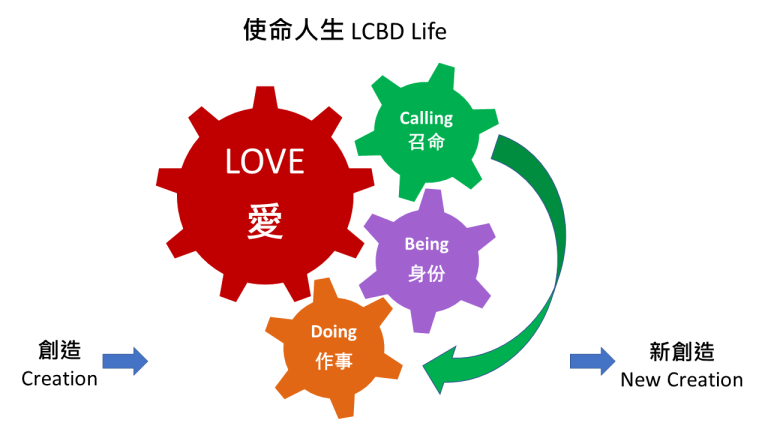
A missional disciple is someone who is deeply loved by God, called by Him, lives as a citizen of His Kingdom, and is sent as His ambassador — living out the LCBD life: Love – Calling – Being – Doing.
Because of LOVE, God created us and redeemed us.
Because of LOVE, God called us (CALLING) out of death into life and gave us the identity of God’s people (BEING).
Because of LOVE, God invites us to participate in His redemptive plan and gives us a clear CALLING.
Surrounded and driven by this LOVE, we dedicate our lives to living for the Lord, becoming His ambassadors, DOING what He entrusts to us — blessing and transforming communities near and far, believing that God will ultimately lead us into His new creation.
Actually, every believer in Jesus should be a missional disciple. We are to take the Kingdom of God as our core value, not the worldly “three perspectives” (worldviews, values, and outlook on life). In everything, God is our first priority, we should follow Christ as King, obey His commands, and live out our faith through service in everyday life.
With the global movement of people and the rise of new media, “mission” has broken through its traditional geographic and professional boundaries — now, everyone can be a missionary. No Christian can claim that sending missionaries is enough, while refusing to personally engage in God’s mission.
Missional Church — Paradigm Shift in “Gathering” and “Scattering”
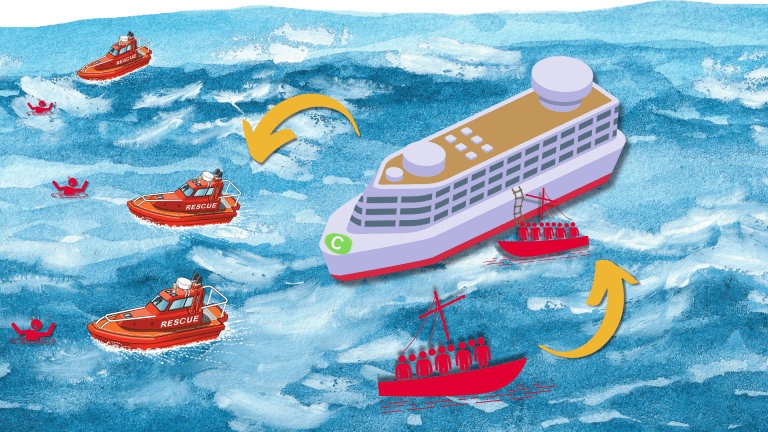
In developed countries, where life is stable and comfortable, churches often gather like-minded people no matter they’re believers or not. This creates a strong “comfort zone” where members warm themselves around the fire and practice mutual love. The church becomes like a luxurious cruise ship where believers enjoy themselves while remaining indifferent to the outside world.
But gathering is not the church’s only calling. Building the church requires a continual cycle of gathering and scattering. The purpose of gathering is ultimately to scatter—then gather again, and scatter again. The church is called to gather all nations as disciples of Christ, not just to keep them, but to nurture missional disciples and then send them out (scatter) to bring God’s blessing to communities near and far.
The church should launch many lifeboats, filled with rescuers—people moved by God’s love, with a clear calling and understanding of their identity—who are sent out into neighbourhoods and society to care for and rescue those in need.
Many have heard the story of the Titanic, but few know about the Carpathia, the British passenger ship that rescued Titanic survivors. On April 15, 1912, at 12:20 am, the Carpathia, known for its affordable fares and lack of luxury first-class cabins, received Titanic’s distress call. Despite the icebergs, it changed course immediately and sped through dangerous waters, reaching the site in three hours. Its crew launched lifeboats and rescued 705 people. Onboard, 740 passengers became rescuers, caregivers, medics, and comforters, offering personal belongings as aid.
Will you be a passenger or a rescuer?
Will your church be a luxury cruise ship or a rescue vessel?
A Healthy Ecosystem for Church Growth
The church must not settle for growing in isolation. Working alone will never achieve the fullest impact. Pastor Tim Keller emphasized the need to break down denominational walls and focus on building God’s Kingdom (https://vimeo.com/708949180). He encouraged forming networks of 5–6 churches within the same district, meeting regularly, collaborating, and sharing resources. Prayer is essential. And through coordinated leadership, churches can divide responsibilities for ministries such as social concern, campus outreach, and workplace ministry. This way, the unchurched can be gathered, trained as disciples, scattered again, and the cycle repeats.
Take Hong Kong as an example. In 2019, with a population of 7.52 million, the poverty rate stood at 21.4%—one in five people lived in poverty. Across the city’s 18 districts, over 650 churches are part of the Hong Kong Church Network for the Poor (HKCNP), partnering together under its coordination to “Do justice & love kindness” mobilizing congregants to build trust with local communities and bless them through action—bringing gospel transformation into neighbourhoods.
Contextualizing the Gospel and Strengthening the Church
The gospel must be contextualized. Churches must “know” the city they’re in and “see” the needs of their community—the people God wants to reach. With Christ’s love, we help remove the barriers they face and walk with them toward transformed lives and eternal hope.
To maintain a healthy ecosystem, churches must work interdependently—only then can they grow effectively and expand God’s Kingdom more fully.